
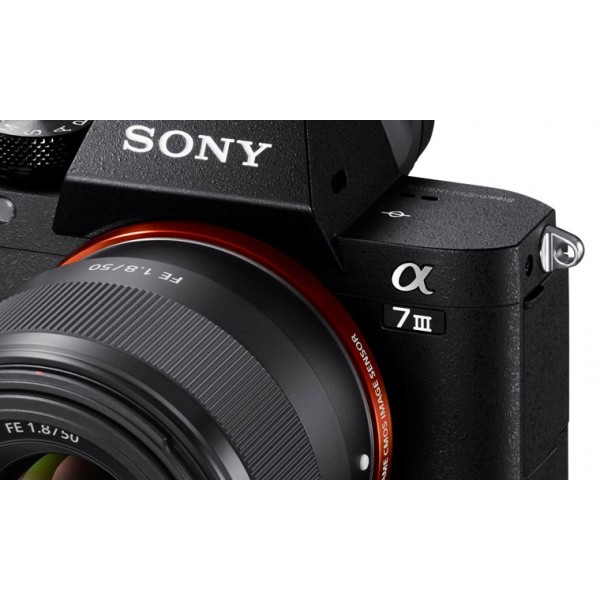
The A7R III uses a 42.4-megapixel sensor while the A7 III tops out at 24.2 megapixels. Thanks to the BSI tech, both full-frame sensors are able to capture more light than conventional sensors. Compared to a conventional sensor and previous generation Sony Alpha, the BSI chips process data faster and produce images with less noise.
In terms of light sensitivity, there are some differences: the A7 III has a native range of ISO 100-51,200, with extended levels low as 50 and as high as 204,800. Meanwhile, the A7R III goes up to 32,000 (native) and 102,400 (extended), making the A7 the better low-light performer on paper (spoiler: it is in practice, too).
Both cameras have the same dimensions (though the A7 is 7 grams lighter), shoot video at 4K up to 30fps or 1080p at 24 / 30 / 100 / 120fps, use the same battery, have dust / moisture resistance thanks to a magnesium alloy frame, and are equipped with dual UHS SD card slots. They also both use the X AVC S codec for video, with creative styles (vivid, natural, mono, etc.) to drastically change the color profile of your photos.
:format(webp):no_upscale()/cdn.vox-cdn.com/uploads/chorus_asset/file/10537527/akrales_180323_2383_0147.jpg)
:format(webp):no_upscale()/cdn.vox-cdn.com/uploads/chorus_asset/file/10537539/akrales_180323_2383_0149.jpg)
:format(webp):no_upscale()/cdn.vox-cdn.com/uploads/chorus_asset/file/10537547/akrales_180323_2383_0155.jpg)
:format(webp):no_upscale()/cdn.vox-cdn.com/uploads/chorus_asset/file/10537537/akrales_180323_2383_0150.jpg)
Some other commonalities between the two cameras, include the Wi-Fi / NFC / Bluetooth radios, USB-C port and tethering, 1 / 8000s max. shutter speed (1 / 250s flash sync), max 10fps with AF / AE tracking (8fps with live view / blackouts), 14-bit RAW (compressed or uncompressed), and finally, the exact same button layout with the exception of a shooting mode lock button on the A7R (a useful feature seen on the A9).
Ports-wise, both cameras share mic input, headphone output, USB 2.0, USB Type C, and Micro HDMI Type D. Still, the A7R III edges it out with an extra port for flash synchronization.
Of course, let’s not forget batteries. Both cameras use Sony’s new NP-FZ100 battery. It’s a big improvement over the last battery model used in the Alpha range, which was criticized for being small and inefficient. In real-world usage, I get around 600 shots before depleting the A7R. The A7 III fairs better, at over 700 photos before needing a charge.
That’s enough to make it through a day of casual shooting or at least one studio shoot on a full charge, probably with either camera. But if you’re using these for event photography, you’ll definitely want a spare battery or two charged up and ready to go.
Both cameras have 3-inch touchscreens — the A7 III’s at 921,600 dot resolution while the A7R has a better 1,440,000 dot version — but that feature is only useful for tapping the screen to focus. Nothing else. Unfortunately, Sony disabled them or mostly everything else they’d be useful for, like navigating the 36 pages of settings (please Sony, redesign the interface). My advice is to get familiar with creating custom settings to avoid the byzantine menu system.
:format(webp):no_upscale()/cdn.vox-cdn.com/uploads/chorus_asset/file/10537559/akrales_180323_2383_0214.jpg)
 Posted by
WoW Price
Posted by
WoW Price


